




‘Crisis’ as Indian states battle BJP for control ofuniversities

The tussle for control of universities between India’s state governments and the country’s ruling BJP party is causing a “crisis” in many institutions, as an ongoing spat in Kerala has escalated to presidential levels.
Kerala’s state government has filed an appeal in the Supreme Court against India’s president after she withheld assent for its proposed changes to university legislation, calling this “unconstitutional”.
The president’s decision means the bills are not rejected, but they cannot progress either until approval is given. As India’s constitution does not stipulate how long a president has to grant assent, this could see the legislation remain in stalemate for the foreseeable future unless the Supreme Court intervenes.
Education in India is concurrently controlled by both state and central governments, and these developments in Kerala are the latest in a fight for power over universities between the left-ruled state government and BJP-appointed governor.
The proposed amendments would see governor Arif Mohammed Khan replaced as chancellor of universities in the state, among other changes. The governor, who controversially directed nine vice-chancellors to resign in October, opposes the move, arguing that state governments should not be given the power to appoint vice-chancellors because this would interfere with universities’ autonomy.
According to Kerala’s state government, Mr Khan had himself refused to pass a total of seven bills, many related to universities, for as long as two years, before referring them for presidential approval. Doing so, they said in their court plea, was making the existence of state legislation “ineffective and otiose”.
“Ironically, the governor, who accuses the Kerala state government of political interference in the functioning of universities, is actually a political appointee of the central government,” said Eldho Mathews, programme officer for the internationalisation of higher education at the Kerala State Higher Education Council.
According to Mr Mathews, these “stalling strategies” are causing a “crisis” in many universities due to the subsequent lack of permanent vice-chancellors and “the limited decision-making powers of the temporary vice-chancellors”, which can include the appointment of faculty.
Saikat Majumdar, a writer and academic at Ashoka University, said the row was part of an “ongoing pattern” of conflict between the central BJP government and non-BJP state governments, which has been “playing out in the sphere of higher education”.
Similar conflicts have emerged in regions including Tamil Nadu, West Bengal and Punjab, where states are governed by parties in opposition to the central government, with universities becoming a battleground for political control.
“Most parties in India, but the BJP above all, have realised that the control of universities is important for the retention of overall political control, as both faculty and student behaviour, as well as curricula, can thus be kept within the needs of the respective political and ideological agendas,” said Professor Majumdar, who was speaking in a personal capacity.
West Bengal’s state education minister has accused the governor of “trying to run a parallel system in our state universities, ignoring the government”, while trying to pass a similar bill to Kerala that would see the governor ousted as chancellor.
But Deepti Acharya, a political scientist at the Maharaja Sayajirao University of Baroda, argued that moving power to the state government was unlikely to solve the problems universities faced. “Since universities are important structures of any society, I doubt that changing the process of appointing vice-chancellors will make universities less political,” she said.
-Helen Packer – “THE”
Related News
The bystander effect: When doing nothing becomes a group decision
A person collapses on a crowded street. Dozens of people are nearby. Some glance over briefly. Others continue walking. A few assume…
Read More
Sri Lanka set to relaunch World’s Largest Lesson after six years, AIESEC to lead national awareness run ahead of flagship event
Sri Lanka is set to once again take part in the World's Largest Lesson (WLL), a global education initiative launched by Project…
Read MoreKafka’s world, our reality: The writer who predicted modern anxiety
Imagine waking up one morning to discover you have transformed into a giant insect. Or being arrested without ever being told what…
Read More
Gateway Elevates University Counselling to Global Standards
Gateway College's global footprint continues to expand through a remarkable legacy of students securing admission to some of the world's most prestigious…
Read More
IFT 2026 to Bring Global Education Leaders to Colombo to Shape Future Ready Teachers
Gateway Graduate School, in collaboration with Flinders University, Australia and OxfordAQA, presents the eighth International Forum for Teachers (IFT) on Saturday, 25th…
Read MoreCourses
-

The future of higher education tech: why industry needs purpose-built solutions
For years, Institutions and education agencies have been forced to rely on a patchwork of horizontal SaaS solutions – general tools that… -

MBA in Project Management & Artificial Intelligence – Oxford College of Business
In an era defined by rapid technological change, organizations increasingly demand leaders who not only understand traditional project management, but can also… -

Scholarships for 2025 Postgraduate Diploma in Education for SLEAS and SLTES Officers
The Ministry of Education, Higher Education and Vocational Education has announced the granting of full scholarships for the one-year weekend Postgraduate Diploma… -

Shape Your Future with a BSc in Business Management (HRM) at Horizon Campus
Human Resource Management is more than a career. It’s about growing people, building organizational culture, and leading with purpose. Every impactful journey… -
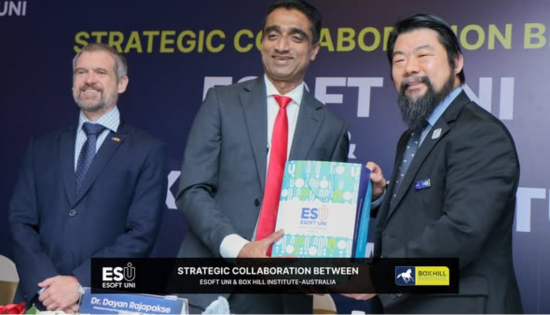
ESOFT UNI Signs MoU with Box Gill Institute, Australia
ESOFt UNI recently hosted a formal Memorandum of Understanding (MoU) signing ceremony with Box Hill Institute, Australia, signaling a significant step in… -

Ace Your University Interview in Sri Lanka: A Guide with Examples
Getting into a Sri Lankan sate or non-state university is not just about the scores. For some universities' programmes, your personality, communication… -

MCW Global Young Leaders Fellowship 2026
MCW Global (Miracle Corners of the World) runs a Young Leaders Fellowship, a year-long leadership program for young people (18–26) around the… -
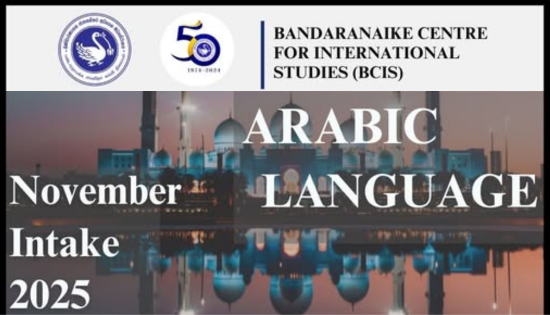
Enhance Your Arabic Skills with the Intermediate Language Course at BCIS
BCIS invites learners to join its Intermediate Arabic Language Course this November and further develop both linguistic skills and cultural understanding. Designed… -

Achieve Your American Dream : NCHS Spring Intake Webinar
NCHS is paving the way for Sri Lankan students to achieve their American Dream. As Sri Lanka’s leading pathway provider to the… -
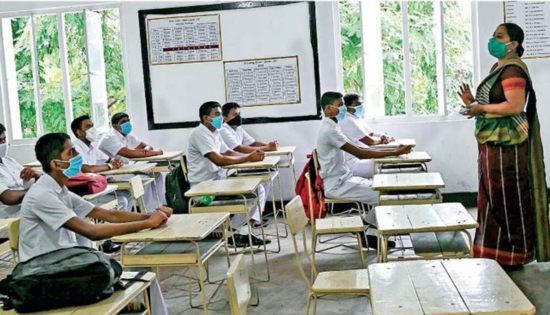
National Diploma in Teaching course : Notice
A Gazette notice has been released recently, concerning the enrollment of aspiring teachers into National Colleges of Education for the three-year pre-service… -
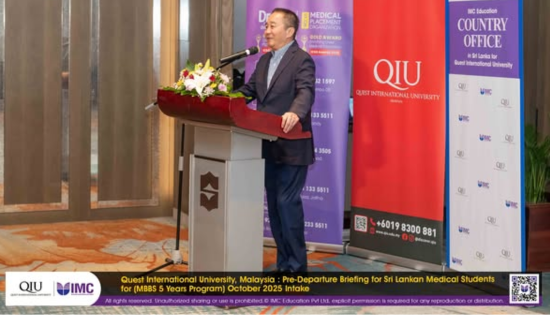
IMC Education Features Largest Student Recruitment for QIU’s October 2025 Intake
Quest International University (QIU), Malaysia recently hosted a pre-departure briefing and high tea at the Shangri-La Hotel in Colombo for its incoming… -

Global University Employability Ranking according to Times Higher Education
Attending college or university offers more than just career preparation, though selecting the right school and program can significantly enhance your job… -

Diploma in Occupational Safety & Health (DOSH) – CIPM
The Chartered Institute of Personnel Management (CIPM) is proud to announce the launch of its Diploma in Occupational Safety & Health (DOSH),… -
Small Grant Scheme for Australia Awards Alumni Sri Lanka
Australia Awards alumni are warmly invited to apply for a grant up to AUD 5,000 to support an innovative project that aim… -
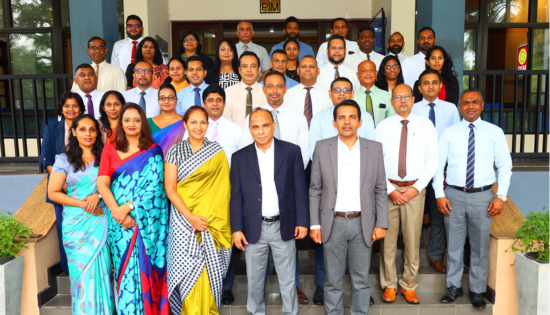
PIM Launches Special Programme for Newly Promoted SriLankan Airlines Managers
The Postgraduate Institute of Management (PIM) has launched a dedicated Newly Promoted Manager Programme designed to strengthen the leadership and management capabilities…
Newswire
-
Court of Appeal postpones hearing of Suresh Sallay’s petition
ON: July 14, 2026 -

No VIP Security for Gnanasara Thera, 10 others: Minister
ON: July 14, 2026 -

Cabinet approves $7.26 Mn contract for BIA terminal expansion
ON: July 14, 2026 -

Cabinet awards Rs. 4.99 Bn contract for Warakapola bypass completion
ON: July 14, 2026